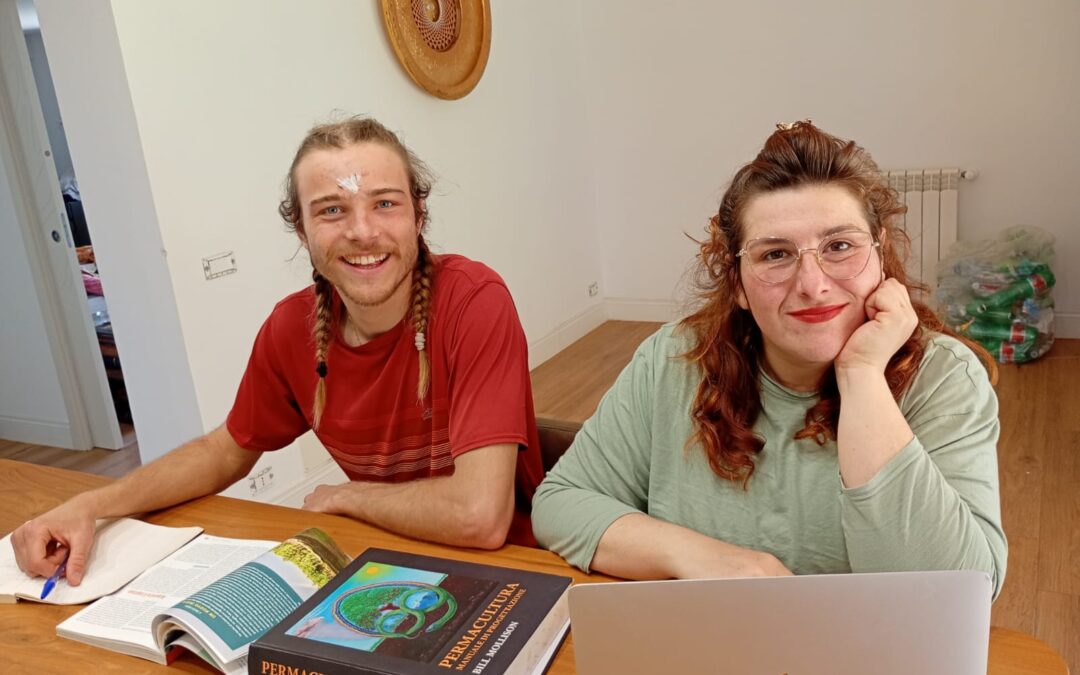
I arrived at Madre Talea in early March with clean hands and a head full of intentions and questions. Three months in, my hands look different: more calloused, darker with soil and resin… and so do the questions. Some have been answered. Others have grown bigger and more mine.
I had read about regenerative agriculture, thought I understood its logic, felt confident in the parallels I could draw with the Sunray model I’d been developing. What I didn’t expect was how quickly the land would dismantle that confidence and invite me to start again from something more experiential.
The pace of the farm in spring is relentless in a quiet way. There are no alarms or deadlines in the conventional sense. But the urgency is real: if you miss the window to transplant, the spontaneous vegetation takes over. If you don’t check the irrigation system before the heat arrives, you lose weeks of work. I spent the first few weeks slightly overwhelmed, not by the complexity of the tasks, but by the sheer presence the farm required. You have to actually be there: with your eyes, hands, and attention. That was the first thing Madre Talea asked of me, and honestly, it was harder than I expected, blending the line between the working day with and my personal time. What surprised me most, though, was how much I enjoyed it.
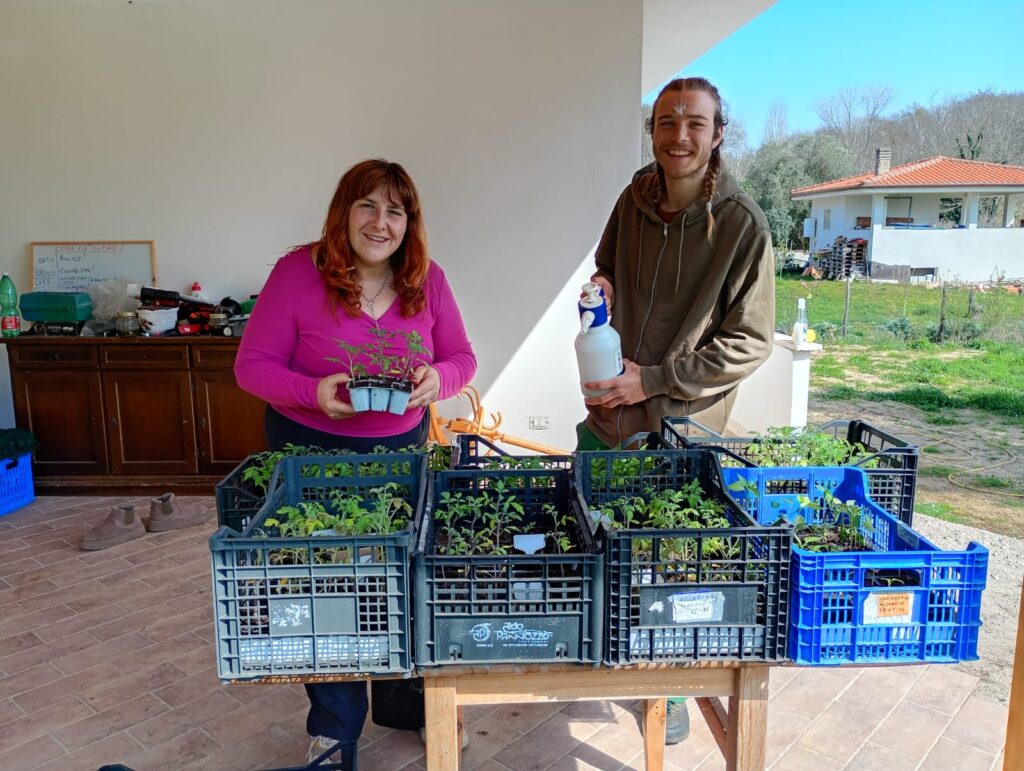
Martina – my host entrepreneur – is able to teach without lecturing. She’d show me how to use the grelinette for minimal tillage, or explain why we were leaving certain spontaneous species between the planted rows, and the reasoning would land not as theory but as something you could immediately feel made sense. With my body, standing in the field, I understood the logic of plant cooperation, the role of biochar, the timing of nursery work to stay one step ahead of annual weeds. These weren’t lessons I wrote down and filed away, although these are essential and I would appreciate even more of them, the practical learning is the protagonist of the exchange.
The Farm Observation Journal I started in the first week has become a genuine and useful companion. At Martina’s suggestion I added weather notes and phenological observations of the plants, making each entry became a small portrait of the land at a specific moment. I look back at the early entries and I can almost smell the soil.
The collaboration has been genuinely good: there’s real mutual understanding between me and Martina, and a natural ease in how we communicate, moving between Italian and English without friction. That foundation matters more than I would have predicted.
Where there’s work to do is in the larger scope of the exchange. The farm’s daily rhythm is absorbing, sometimes beautifully so, and it can pull you fully into the operational without leaving enough space for the more entrepreneurial layer of why I’m here. There have been moments where clearer guidance on priorities – which ideas to develop, how to structure the coming months with more intention – would have helped. The farm’s pace naturally favours the immediate and the practical; the bigger-picture work needs someone to occasionally call a pause and zoom out together.
The groundwork is solid. What the second half calls for is translating that mutual understanding into a more deliberate conversation about goals so that what I take away goes beyond the formative, and starts to become something I can genuinely build on.

Furthermore, I want to set myself a specific goal: to move from observer to proposer. The first three months gave me roots. Now I want to start building something tangible with them, to take forward as a real lesson in my entrepreneurial journey. I’ve identified a few concrete ideas: an updated irrigation and water protocol, a comprehensive mapping of the planted species along Madre Talea’s land, a simple framework for educational visits, a photographic documentation of farm processes; and I’m ready to bring them forward in a structured way, always respecting Martina’s timing and priorities.
Importantly, this experience is teaching me that being an entrepreneur in regenerative agriculture isn’t just about knowing how to sell or communicate. It’s about knowing how to be present: with the land, with people, and Nature’s rythm.
Halfway through, I feel more grounded. And this, I believe, is the most valuable thing I could have hoped for.