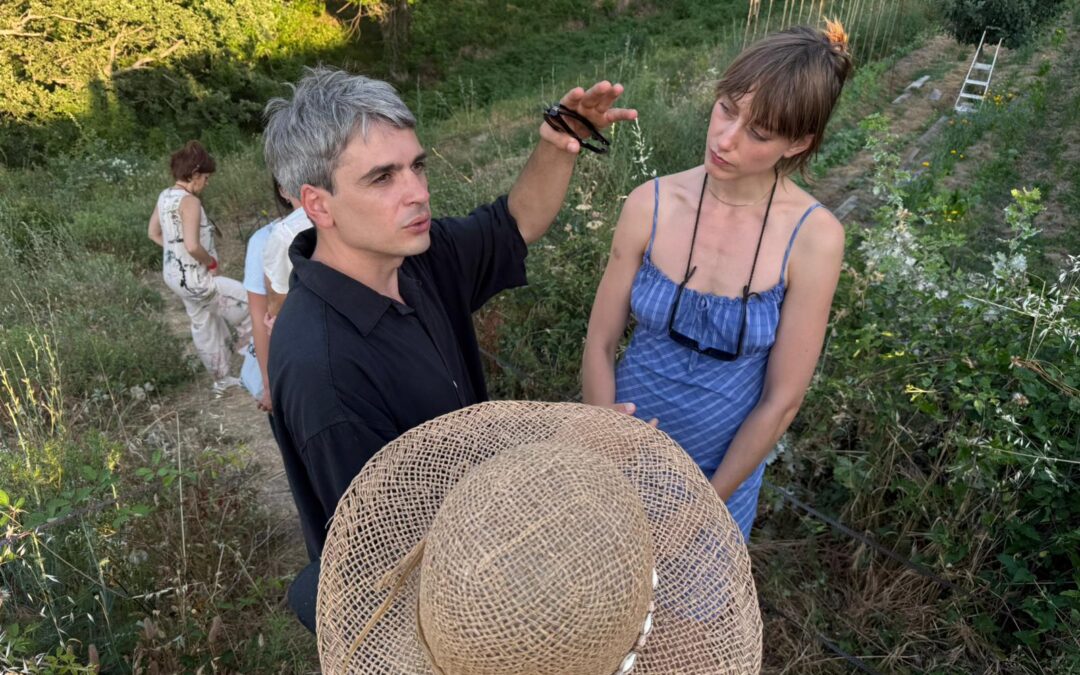
The first part of my exchange has been both intensive and deeply rewarding. From the beginning, the project has centred on understanding how a productive market garden can become the heart of a wider ecosystem where agriculture, cuisine, artistic practice, and community engagement reinforce one another.
Working closely with Antoine and the rest of the team, I have been involved not only in establishing and maintaining the garden but also in developing the systems that connect it to the wider activities at Providenza. Alongside the practical work of preparing beds, planting, harvesting, and coordinating production with the restaurant, we have explored how to build a viable business model for a hybrid agricultural project. This has included discussions around crop planning, seasonal menus, pricing, local distribution, volunteer coordination, and how the garden can support both economic sustainability and cultural programming.
One of the greatest challenges has been working with heavy clay soils across a large area of land while operating with a limited budget. These conditions have required us to constantly adapt, prioritise, and make thoughtful use of the resources available. Rather than relying on expensive infrastructure, we have focused on building resilient systems through careful planning, collaboration, and gradual soil improvement. This has been an invaluable entrepreneurial lesson, demonstrating that innovation often comes from working creatively within constraints.
An equally important aspect of the exchange has been working alongside volunteers from different countries and backgrounds. Coordinating daily work, sharing knowledge, and creating an inclusive environment has highlighted how essential community participation is to projects like Providenza. It has also given me practical insight into developing clear yet flexible structures for volunteer involvement, one of the objectives we identified at the start of the exchange.
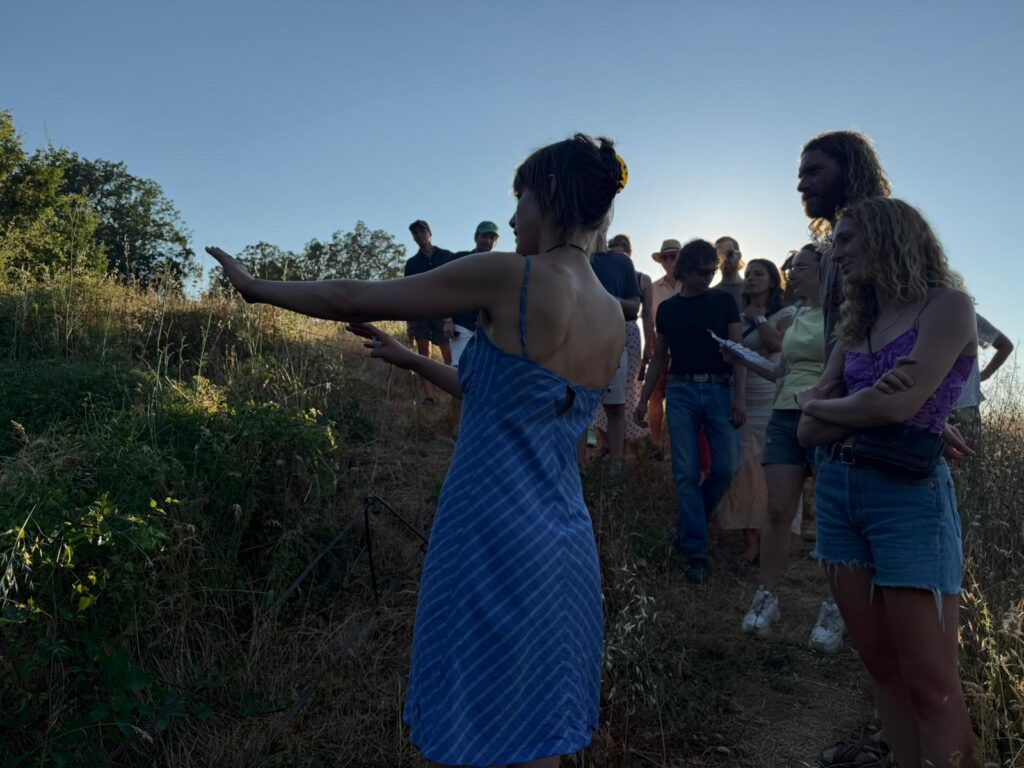
A particularly meaningful milestone was the opening of the restaurant on 26th of June, which also marked the conclusion of the first cycle of artistic residencies. Residents presented the work they had developed during their stay, while the restaurant welcomed visitors for the first time. During the event I gave guided tours of the garden, sharing the work that had been carried out over the previous months and explaining how the garden is intended to support not only the restaurant but also the cultural identity of Providenza. It was inspiring to see visitors engage with the space and to witness how agriculture, food, and artistic practice could be presented as interconnected parts of the same project.
Overall, I feel that the objectives established in our commitment have been successfully realised, even if the path towards them has not always been linear. Some of the most valuable learning has come from adapting to unexpected challenges rather than following the original plan. Through this process, I have gained a deeper understanding of how agriculture, culture, and community can support one another, and how meaningful projects are built through collaboration, patience, and a willingness to learn from both successes and setback